
How to Clear Cloudy Pool Water: Causes, Diagnosis, and Step-by-Step Solutions
Cloudy pool water is a common frustration for pool owners.
Dull, hazy water reduces the appeal of your backyard oasis and may indicate underlying problems that affect safety.
Fortunately, with proper diagnosis and a systematic approach, you can restore clarity within a few days.
This guide explains the primary causes of cloudy water and provides a proven method to return your pool to crystal-clear condition.
Common Causes of Cloudy Pool Water
Cloudy water occurs when tiny particles remain suspended in the water rather than being captured by the filter. These particles scatter light, creating a hazy appearance. The main causes fall into several categories.
Poor Filtration and Circulation
Your filter removes dirt, debris, and microscopic particles from the water.
When the filter is dirty, clogged, or not running long enough, particles accumulate faster than they are removed.
A filter pressure gauge reading 8 to 10 psi above normal indicates it needs cleaning.
Running the pump only 4 to 6 hours per day is often insufficient for proper circulation.
Chemical Imbalances
Improper water chemistry is a leading cause of cloudiness.
When pH rises above 7.8, calcium and other minerals precipitate out of solution, creating visible haze.
Low free chlorine levels allow organic contaminants such as body oils, sunscreen, and algae spores to build up.
High calcium hardness above 400 ppm produces a milky or chalky appearance.
Unbalanced total alkalinity can cause pH fluctuations that trigger these problems.
Environmental Factors
Heavy rainfall introduces contaminants and dilutes pool chemicals. Sunlight breaks down chlorine, reducing sanitizer effectiveness. Pollen, leaves, and other debris from nearby trees or construction can overwhelm the filtration system. Even heavy swimmer usage adds oils and organic matter that contribute to cloudiness.
Post-Shock Cloudiness
If your water turns cloudy immediately after shocking the pool, this is usually temporary. Shock oxidizes dissolved organic waste, making it visible before the filter captures it. This indicates the shock is working correctly, and the cloudiness typically clears within 24 to 48 hours.
Diagnosing the Problem
Before treating cloudy water, identify the root cause. Start by inspecting your filter. Confirm it is clean, functioning properly, and running for at least 8 hours per day. Check the skimmer basket and remove any debris that may restrict flow.
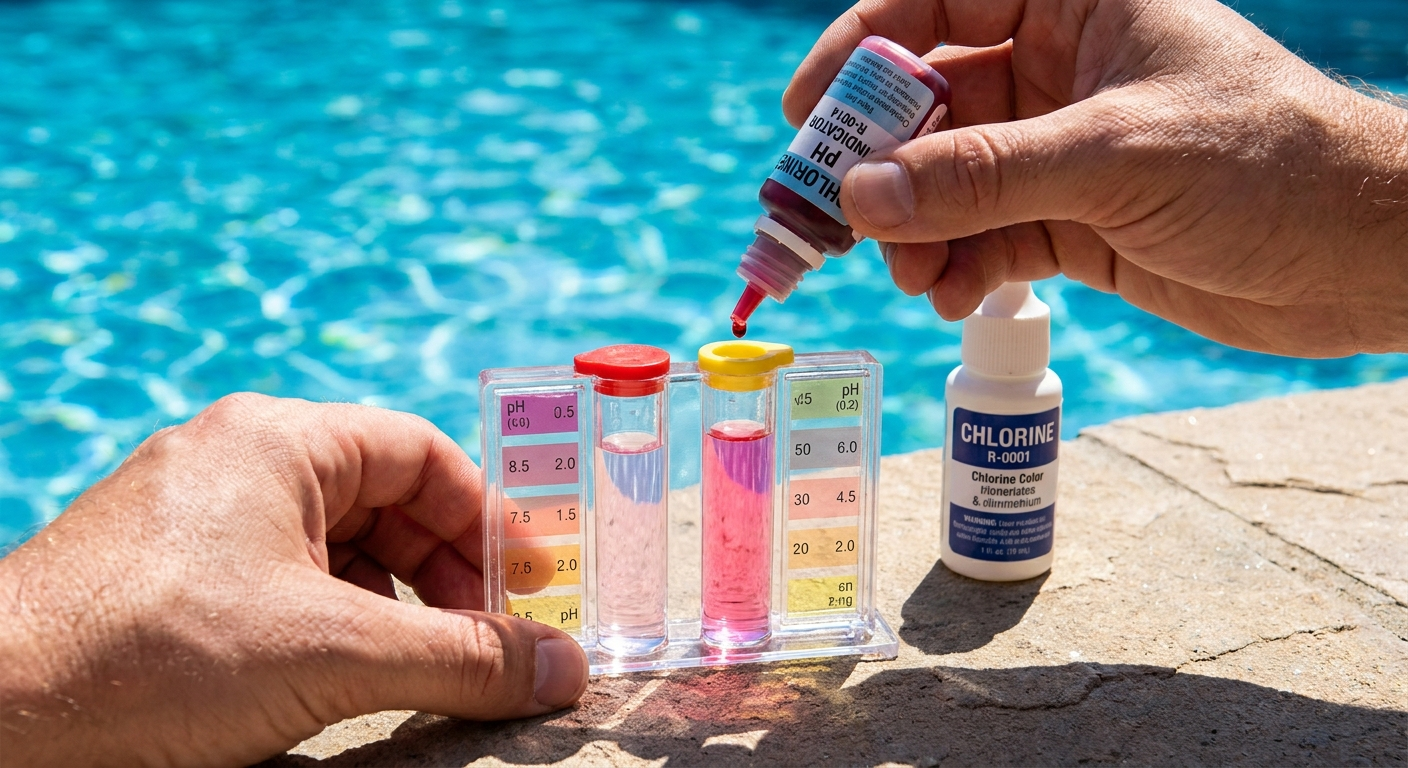
Next, test your water with a reliable liquid test kit. Test strips are not accurate enough for troubleshooting. Measure these five parameters:
- Free chlorine: target 2 to 4 ppm
- pH: target 7.4 to 7.6
- Total alkalinity: target 80 to 120 ppm
- Calcium hardness: target 200 to 400 ppm
- Cyanuric acid: target 30 to 50 ppm
Compare your results against these targets. Any reading outside the recommended range can contribute to cloudy water.
Step-by-Step Treatment Plan
Follow this systematic approach to clear cloudy pool water. Work through each step in order for the best results.
Step 1: Balance Water Chemistry
Fix imbalances in a specific order. Adjust total alkalinity first because it controls pH stability. Use sodium bicarbonate to raise low alkalinity.
Then adjust pH to the target range using muriatic acid or sodium bisulfate.
Next, address calcium hardness if it exceeds 400 ppm — the only reliable method is partial drainage and refill with fresh water.
Finally, adjust chlorine levels after pH is correct since pH affects chlorine effectiveness.
Step 2: Shock the Pool
Even if chlorine levels appear acceptable, shock the pool to oxidize organic contaminants.
Use calcium hypochlorite at a rate of 1 pound per 10,000 gallons of water.
For heavily contaminated water, use up to 2 pounds per 10,000 gallons.
Apply the shock in the evening so sunlight does not degrade the chlorine.
Run your filter continuously for 24 to 48 hours after shocking.
Step 3: Clean and Run the Filter
A clogged filter cannot clear cloudy water.
Backwash sand or DE filters until a clear stream of water flows. Remove and rinse cartridge filters thoroughly. Chemically clean filter media if buildup is heavy.
After cleaning, run the pump and filter for 24 hours per day until the water clears.
Step 4: Use a Clarifier or Flocculant
If water remains cloudy after balancing and shocking, add a pool clarifier.
Clarifiers bind tiny particles into larger clusters that your filter can trap. This speeds up the clearing process significantly.
For stubborn cloudiness, a flocculant may be more effective — it causes particles to sink to the bottom where you can vacuum them out manually. Follow product instructions carefully.
Step 5: Vacuum and Brush
Manually vacuum the pool to remove settled debris. Brush the walls and floor to loosen particles clinging to surfaces. This reduces the load on your filter and accelerates clearing.
Step 6: Retest After 48 Hours
Give the treatment 48 hours to work, then retest your water. Make any final adjustments needed to keep chemistry balanced. If the water is still cloudy after 48 hours, repeat the shock treatment.
Prevention Tips for Long-Term Clarity
Once your pool is clear, maintain it with consistent practices.
Run your filter 8 to 12 hours per day during normal operation. Test your water weekly and adjust chemicals promptly.
Shock the pool weekly as part of your routine, and after heavy rainfall or pool parties.
Clean your filter at least twice per year and replace filter media according to manufacturer recommendations. Keep skimmer baskets empty and brush pool surfaces regularly.
If you encounter persistent cloudiness that does not respond to these steps, a more thorough investigation may be needed.
Learning how to fix cloudy pool water involves addressing the specific combination of factors affecting your pool.
With proper diagnosis and consistent maintenance, you can keep your pool water inviting and safe throughout the swimming season.
Related Article
Discover Techyhittools Org: Your Simple Guide to Free Social Growth

APKek Org Guide: Everything You Need to Know About This Platform